
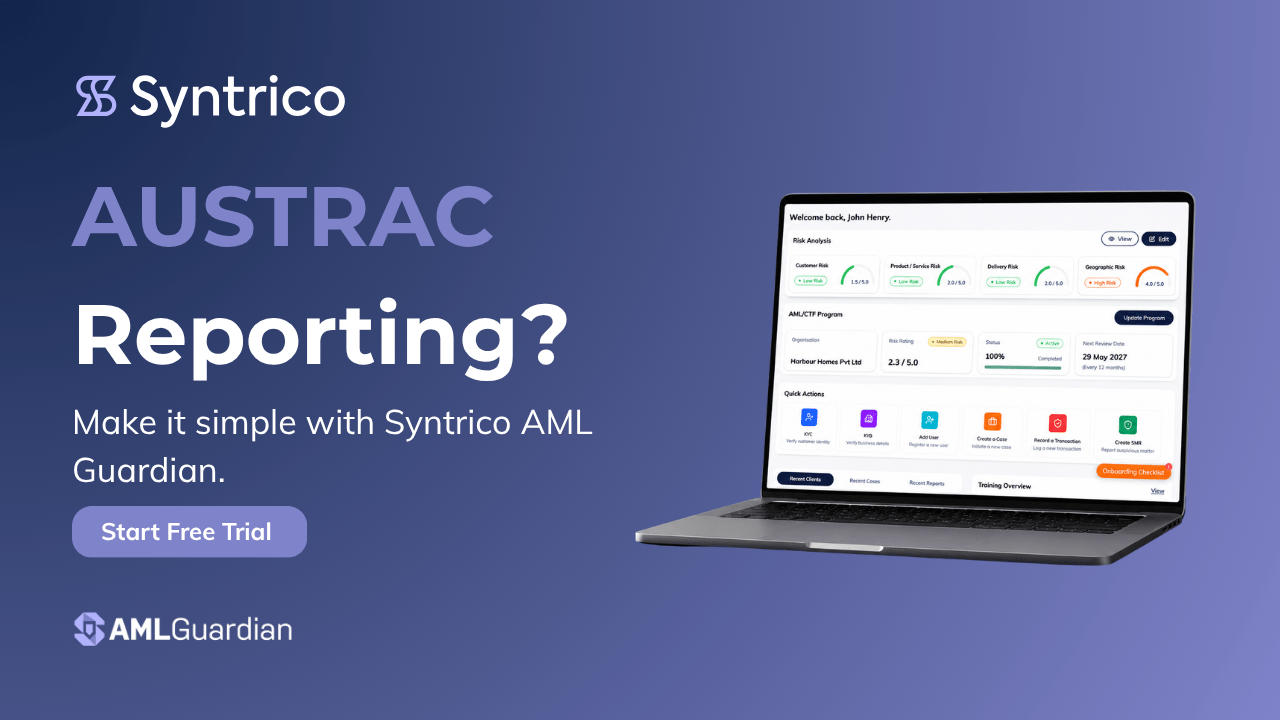
With Australia nearing the release of the latest AML/CTF reform through Tranche 2, more and more businesses will soon be burdened with heightened compliance duties. These can extend far beyond just an identification check on your customers, and businesses will be required to both verify and then continuously monitor customer identities and risk levels, identify suspicious activity and report on it, and maintain sufficient records and be aware of their ongoing AUSTRAC reporting requirements.
These tasks quickly become unmanageable manually as businesses scale and are often processed via spreadsheets, emails and incompatible systems resulting in missed deadlines, errors and time delays.
This is where Syntrico AML Guardian comes in.
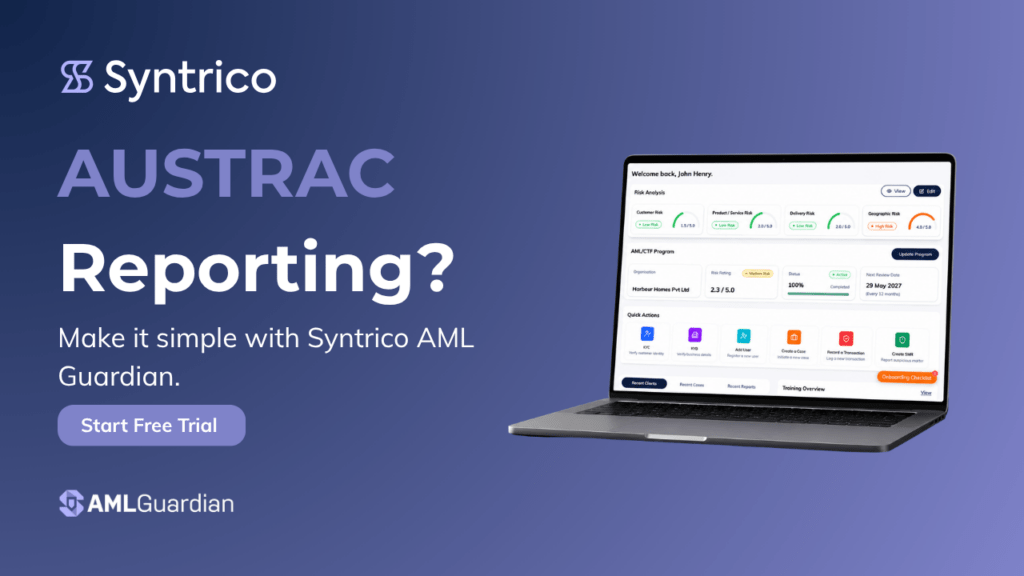
Syntrico AML Guardian is an integrated, end-to-end AUSTRAC compliance system that provides assistance to Australian businesses in managing and processing AML/CTF compliance. The platform assists with onboarding, KYC/KYB verification, customer due diligence and risk assessment, transaction monitoring, reporting workflow management and compliance record keeping within a single secure system and guided processes that will cut out the manual workload, and make reporting more accurate and consistent, ensuring that you meet your AUSTRAC regulatory requirements.
What is AUSTRAC Reporting?
AUSTRAC is Australia’s anti-money laundering and counter-terrorism financing regulator. Its responsibilities include: enforcing the Anti-Money Laundering and Counter-Terrorism Financing Act.
The AML/CTF Act requires certain reportable situations to occur and risks identified within the business or associated customers, be reported to AUSTRAC.
With the upcoming Tranche 2 regulations, sectors such as law, accounting, real estate and conveyancing will be subject to more stringent compliance obligations and AUSTRAC compliance reporting as currently required in the financial services industry.
Types of AUSTRAC Reports
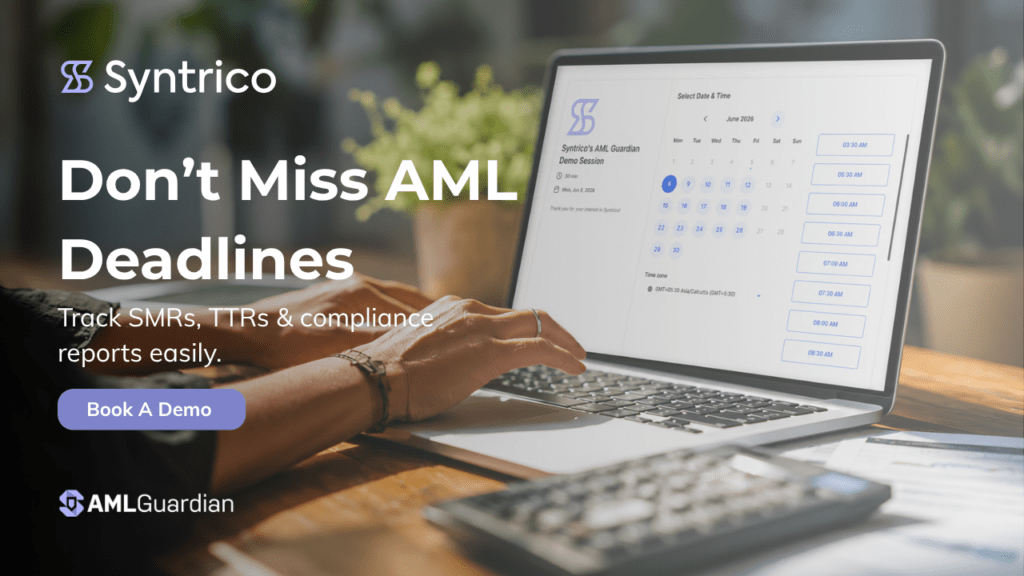
Each report type and their relevant deadlines are important for understanding compliance obligations:
1. Suspicious Matter Reports (SMRs)
A business is required to submit a Suspicious Matter Report to AUSTRAC whenever they have a reasonable suspicion that an activity, transaction or customer is linked to financial crime.
The potential forms of financial crime that are considered may be:
- Money laundering
- Fraud
- Tax evasion
- Terrorism financing
- Identity misuse
A SMR should be submitted:
- Within 24 hours where terrorism financing is suspected
- Within 3 business days for all other suspicious matters
The types of suspicious activities are varied and may include:
- Customers that are reluctant to provide information and pass identity checks
- Unusual transaction patterns and methods
- Large amounts of cash transacted that cannot be explained
- The purchase and sale of property that seems unusual
- Customers unwilling to provide identifying documents
- Transactions that do not align with customer behavior and financial activity
Crucially, it is an offence to “tip off” a customer that a report has been made or is in the process of being made to AUSTRAC.
2. Threshold Transaction Reports (TTRs)
The TTR reporting mechanism allows AUSTRAC to monitor high-risk cash transactions in Australia.
A TTR should be submitted if a business processes a cash transaction for an amount of AUD $10,000 or more or its equivalent in a foreign currency while providing a designated service.
It is important to note that these reports are for cash transactions only and do not include other forms of payment, such as electronic transfers, credit card payments, checks, etc.
A TTR should be lodged within 10 business days of the transaction.
3. Compliance Reports
Businesses governed by the AML/CTF Act may be required to lodge regular compliance reports to demonstrate that the business is meeting its obligations.
A compliance report will typically verify:
- The implementation of an AML/CTF program
- The conduct of risk assessments
- The provision of staff training
- The efficacy of customer due diligence procedures
- The management of financial crime risks
AUSTRAC has updated its reporting periods to match Australia’s financial year. As such, the reporting period for 2026 will commence on July 1, 2026, through to June 30, 2027, and reports are generally due by the end of September each year. Businesses that will become regulated on July 1, 2026, are exempt from filing a 2025 compliance report.
Importance of AUSTRAC Reporting Deadlines
Perhaps the most frequent compliance breach is related to the lodgement of reports within specified timeframes.
It is essential for businesses to be aware of and adhere to the separate reporting deadlines for each type of report to avoid significant compliance failures and attract AUSTRAC attention.
These late submissions often occur due to:
- The manual processing and monitoring of reports
- The lack of coordination between departments within the business
- Missing or unverified documentation
- Inconsistent business processes
- A lack of clarity and visibility of processes within the organization
The increasing transaction volumes and expanding customer base of a business, along with manual processes, only makes it more challenging to keep on top of obligations and increase the risk of compliance failure.
AUSTRAC Compliance Failure Risks
Failing to meet AUSTRAC reporting requirements may attract serious consequences for a business. Depending on the nature and scale of the breach, AUSTRAC can respond in a number of ways including through:
- Investigations
- Infringement notices
- Remedial directions
- Enforceable undertakings
- Civil penalty proceedings
Common areas of compliance failure include the failure to lodge SMRs, late and incorrect reporting and poor customer verification procedures, weak monitoring, and an inadequate AML/CTF program. Apart from financial penalties and potential legal action, such failures can damage the reputation and operations of a business.
Automation to Simplify AUSTRAC Compliance Reporting
As the regulatory landscape continues to evolve, automation of processes is increasingly critical for Australian businesses.
The use of an automated AUSTRAC compliance solution such as Syntrico AML Guardian assists businesses in many ways, including:
- Quick detection of suspicious activity
- Continuous monitoring of customer activity
- Proactive notification of report deadlines
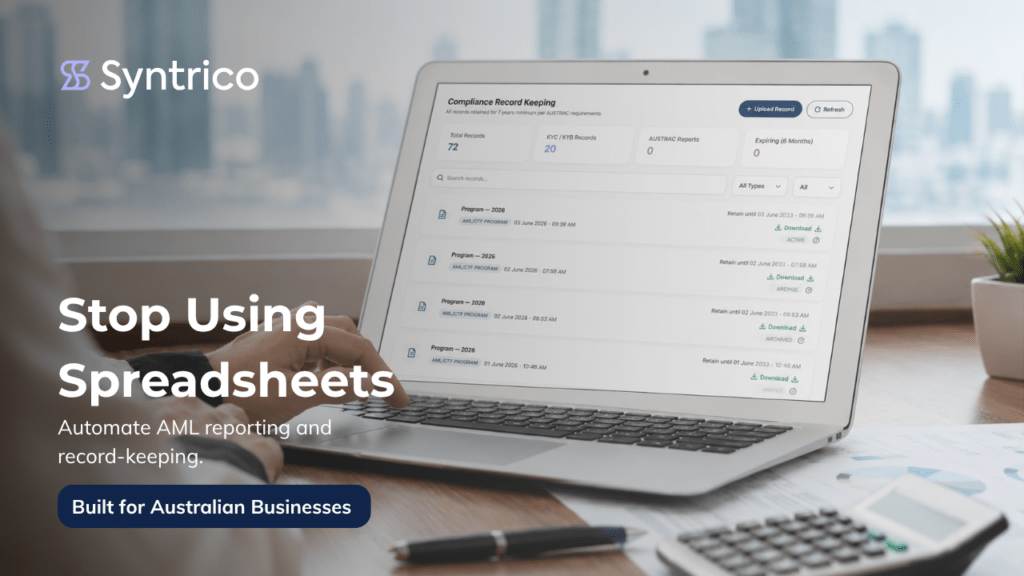
- Secure and centralized storage of compliance documents
- Reduction in manual error
- Improvement in customer verification processes
- More efficient and user-friendly risk assessment procedures
Platforms such as Syntrico AML Guardian help businesses manage compliance as one centralized system rather than using spreadsheets and separate processes and facilitate simpler and more manageable AUSTRAC reporting for businesses such as real estate agencies, conveyancers, lawyers, accountants and other regulated service providers.
Conclusion
It is important for businesses to understand and be aware of their obligations under Australian AML/CTF laws, particularly with the introduction of new Tranche 2 reforms. Preparation and the use of automated systems will allow businesses to better manage their ongoing obligations. This, coupled with robust and effective compliance management will see businesses confidently manage compliance into the future. Ready to simplify your AUSTRAC compliance report processing and minimize compliance risk with Syntrico AML Guardian?