
Meeting AUSTRAC compliance is a critical responsibility for Tranche 2 businesses in Australia. These businesses must keep detailed records to help prevent money laundering, terrorism financing, and other financial crimes. Understanding exactly what records to maintain can be complex, but it is essential for avoiding penalties and ensuring smooth operations.
This blog breaks down the key records of Tranche 2 businesses must keep, why they matter, and practical tips for maintaining them effectively.
What are Tranche 2 Businesses?
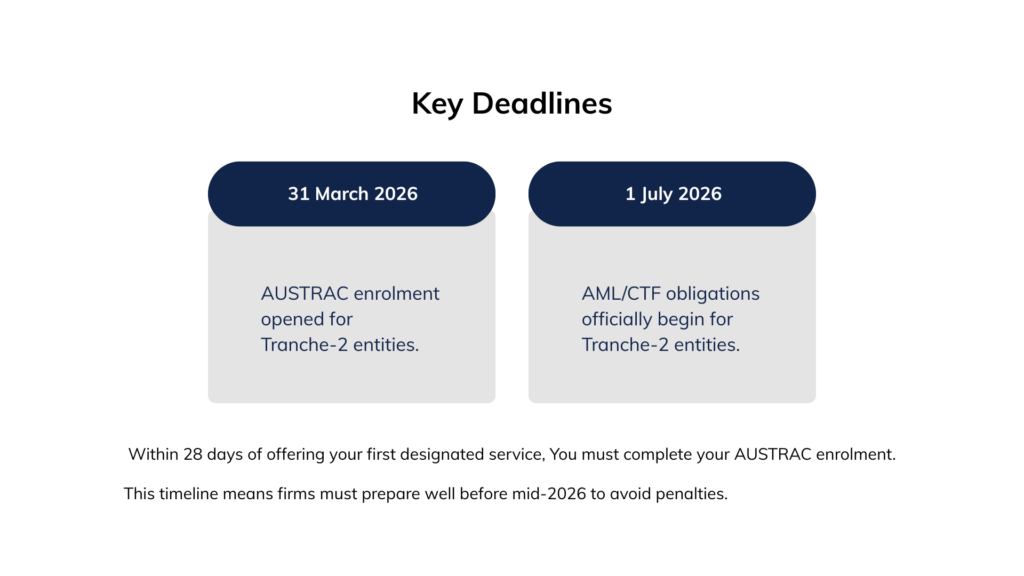
Tranche 2 businesses are a group of newly regulated entities that will come under AUSTRAC’s regulatory framework from 1 July 2026. These businesses must begin preparing now to meet their obligations by the commencement date. They include businesses that provide designated services such as:
- Real estate agents
- Law firms
- Accountants
- Conveyancers
- Trust company service providers
- Precious metal dealers
These businesses have obligations to report certain transactions and maintain records that demonstrate compliance with anti-money laundering and counter-terrorism financing (AML/CTF) laws.
Why Record Keeping Matters for AUSTRAC Compliance Tranche 2 Businesses
AUSTRAC requires Tranche 2 businesses to keep accurate and complete records to:
- Verify the identity of customers
- Monitor and report suspicious transactions
- Provide evidence during audits or investigations
- Demonstrate compliance with AML/CTF obligations
Failing to keep proper records can lead to fines, legal action, and reputational damage.
Key Records AUSTRAC Compliance Tranche 2 Businesses must keep
1. Customer Identification Records
Every Tranche 2 business must collect and keep records that verify the identity of their customers. This includes:
- Full name
- Date of birth
- Residential address
- Identification documents (e.g., passport, driver’s license)
- Date and method of verification
For example, a real estate agent must record and verify a buyer’s identity details before facilitating a property transaction on their behalf.
2. Transaction Records
Detailed records of all transactions involving designated services must be maintained. These records should include:
- Date and time of the transaction
- Amount and currency involved
- Type of transaction (e.g., cash exchange, remittance)
- Details of the parties involved (sender and receiver)
- Transaction reference numbers
For instance, a law firm handling a client’s property settlement must keep records of all funds received, including the client’s details, amount, and purpose of the transaction.
3. Suspicious Matter Reports (SMRs)
If a business detects a transaction or activity that appears suspicious or unusual, it must file an SMR with AUSTRAC. Records related to SMRs include:
- Supporting documents and evidence
- Internal notes or investigations related to the suspicious activity
Keeping these records helps demonstrate the business’s proactive approach to AML/CTF compliance.
4. Compliance Program Documentation
Tranche 2 businesses must maintain documentation of their AML/CTF compliance program, including:
- Risk assessments
- Policies and procedures
- Staff training records
- Internal audit reports
This documentation shows AUSTRAC that the business has systems in place to manage and mitigate risks.
5. Records of Reporting to AUSTRAC
Businesses must keep copies of all reports submitted to AUSTRAC, such as:
- Threshold transaction reports (TTRs): Reports submitted for each physical currency (cash) transaction of AUD $10,000 or more. Each transaction is treated separately – transactions are not aggregated.
- International funds transfer instructions (IFTIs): Reports submitted when funds are sent or received internationally. Note: Under the 2026 AML/CTF reforms, IFTIs will transition to a new International Value Transfer Service (IVTS) reporting framework.
- Suspicious matter reports (SMRs): Reports submitted when a transaction or activity appears unusual or potentially suspicious, regardless of the amount involved.
- Annual Compliance Reports: Tranche 2 businesses must submit an annual AML/CTF compliance report to AUSTRAC and retain a copy of each report submitted.
These records should be stored securely and easily accessible for review.
How long must Records be kept?
AUSTRAC requires Tranche 2 businesses to keep records for a minimum of seven years from the date the record was created, or the transaction occurred. This period allows AUSTRAC to conduct thorough investigations if needed. To understand Tranche 2 obligations in detail, review AUSTRAC’s official guidance on record‑keeping requirements
Practical tips for AUSTRAC Compliance: Tranche 2 Businesses Record Keeping
- Use secure digital systems with backup to store records safely.
- Implement clear procedures for collecting and verifying customer information.
- Train staff regularly on record-keeping requirements and AML/CTF obligations.
- Conduct periodic internal audits to ensure records are complete and accurate.
- Keep records organised by date and type to facilitate easy retrieval.
Key dates every Tranche -2 Business musk know
Common Challenges and How to overcome them
Challenge – 1: Managing Large Volumes of Data
Tranche 2 businesses often handle many transactions daily, making record management complex.
Solution: Use specialised compliance software designed for AML/CTF record keeping. Automate data capture and reporting where possible.
Challenge – 2: Ensuring Data Security
Sensitive customer information must be protected from breaches.
Solution: Apply strong access controls, encryption, and regular security audits to safeguard records.
Challenge – 3: Keeping up with Regulatory Changes
AUSTRAC’s requirements can evolve, requiring updates to record-keeping practices.
Solution: Subscribe to AUSTRAC updates and review compliance programs regularly to stay current.
Maintaining the right records is not just a legal obligation for Tranche 2 businesses but a foundation for trust and integrity in the financial system. By keeping detailed customer identification, transaction, and reporting records, businesses can confidently meet AUSTRAC’s standards and reduce risks.
How Syntrico helps Tranche 2 Businesses stay AUSTRAC Compliant
Managing AUSTRAC compliance manually is time-consuming, error-prone, and risky. Syntrico’s purpose-built end-to-end AML Compliance platform helps Tranche 2 businesses – including real estate agents, law firms, accountants, and more – stay on top of every record-keeping obligation with confidence
Whether you are preparing for an AUSTRAC audit or building your compliance program from the ground up, Syntrico empowers you to achieve compliance right – the first time.
Ready to simplify your AUSTRAC compliance?
👉 [Get Started for Free] | [View Pricing] | [Book a Demo]
Join Tranche 2 businesses across Australia that trust Syntrico to keep them compliant, protected, and audit-ready.